






Molly Shoichet
Scientific DirectorRegenerative medicine & drug delivery
PRiME connects scientists, clinicians, engineers, and global partners to turn individual biology into better diagnostics, therapies, and models of disease.

AI-driven discovery, gene editing, and next-generation platforms—moving precision medicine from concept to clinic.

A global community of researchers, clinicians, and industry partners gathered to accelerate innovation.

Research rounds, funding calls, speaker announcements, and new work from across the PRiME ecosystem.
PRiME brings scientists, clinicians, engineers, and global partners into one connected network. Together, they read disease across molecular, cellular, clinical, and environmental signals—and move shared insight toward better diagnostics and therapies.
About PRiME ↗See disease through molecular, cellular, clinical, and environmental signals.
Bring scientists, engineers, clinicians, and partners around the same evidence.
Turn shared insight into better models, diagnostics, and targeted therapies.
Move discoveries toward decisions that fit the person, not only the disease.
Five complementary roles connect discovery, strategy, partnerships, and translation across the PRiME network.
Regenerative medicine & drug delivery

Research strategy & translation

Metabolic disease & drug discovery
Precision ageing & brain health
Precision diagnostics & translation
The coordination, communication, and care that keep the network moving.

Program development, research coordination, and community support.

Communications, events, and stories that connect the PRiME community.
One connected platform moves ideas from molecular insight to models, diagnostics, and precisely targeted therapies.
View all research areas ↗Four ways to take your next step.
From research training to ideas in the world.
One-year support for bold, interdisciplinary precision-medicine research led by senior doctoral, clinical, and postdoctoral fellows.
Venture training, industry mentorship, and pitch development for research teams translating science into products.
Cross-disciplinary graduate training that connects precision medicine across departments and professional cultures.
International exchanges, shared expertise, and global perspectives addressing complex disease biology.
Research, translation, and community stories from across the network.
View all news ↗
Nearly 200 researchers, clinicians, trainees, and industry leaders met at PRiME's seventh annual symposium.
Continue reading ↗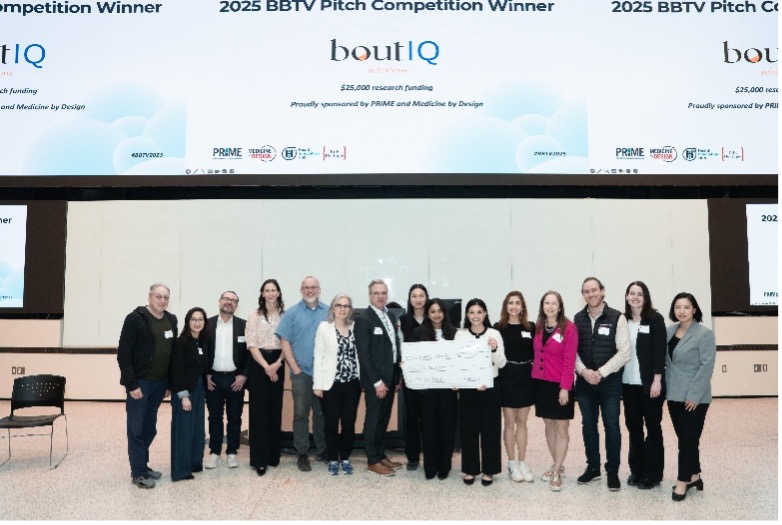
An AI-powered media optimization startup took the top prize as six ventures translated research into opportunity.
Continue reading ↗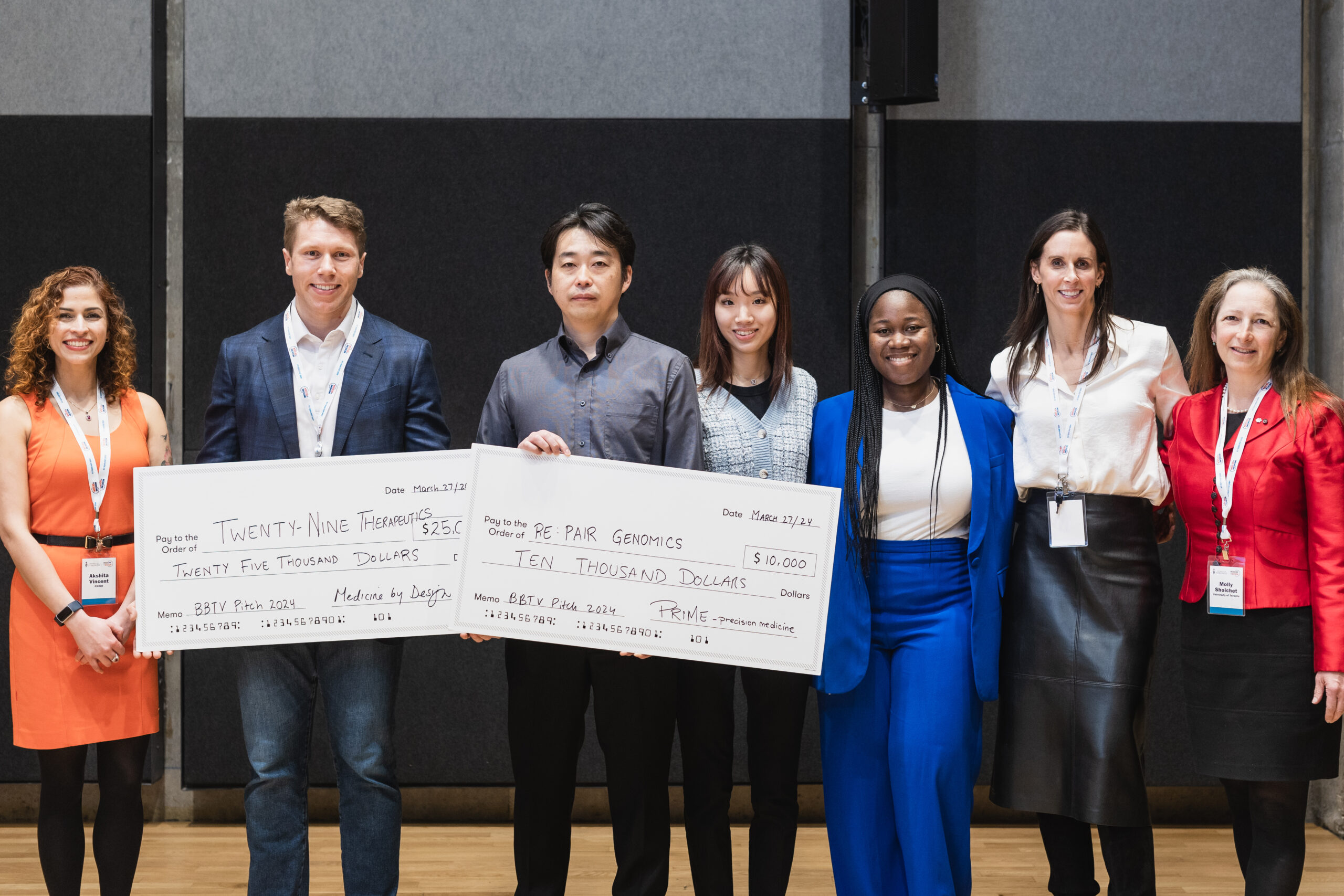
Trainee-led teams advanced ideas spanning stroke, neurodegeneration, spinal injury, and hypoglycemia.
Continue reading ↗
The sixth annual symposium brought 250 participants together around precision medicine and drug discovery.
Continue reading ↗
The fellowship supports emerging investigators pushing interdisciplinary precision medicine forward.
Continue reading ↗Symposia, research rounds, and speaker exchanges bring the precision-medicine community into the same room.
View all events ↗
A new program of research rounds, speakers, and symposia is being prepared.
Receive notices ↗A global exchange on emerging therapeutics, endocrine health, brain health, and more representative research.
View event ↗An international research exchange examining metabolism and fasting-feeding cycles.
View event ↗Cross-disciplinary graduate researchers shared work across science, engineering, and medicine.
View event ↗PRiME builds the conditions for precision-medicine ideas to travel—from shared evidence to trained people, translational programs, and a connected global community.
Receive the latest opportunities or become part of the network.
News, events, programs, funding calls, and community stories.
Join investigators, trainees, clinicians, and partners.
Join PRiME ↗Design concept, art direction, technical specifications, and accessibility review for the receiving agency.
prime-homepage-conceptsapp/PrimeHomepage.tsxapp/homepage-v2.module.cssapp/lib/content.tsapp/HubStarTitle.tsx and app/PremiseNetworkField.tsxpublic/generated/npm installnpm run devnpm run lint and npm run buildThe implementation target is AODA and WCAG 2.2 Level AA. Reduced-motion alternatives, keyboard operation, readable structure, focus visibility, contrast, and non-drag controls must be preserved through future revisions.
Conformance is not yet certified. Complete manual screen-reader, keyboard, zoom, reflow, contrast, and motion testing before launch approval.
Core content is currently maintained in local TypeScript arrays. Several photographs and the primary logo are loaded from prime.utoronto.ca; generated concept artwork is stored locally.
Before final launch, replace placeholder appointments and “Date TBA” event content, confirm image rights, and migrate approved remote media to an institution-controlled asset source or CMS.
The source is maintained in the private GitHub repository biohubnet/prime-homepage-concepts ↗. Access must be granted by the BioHubNet account owner.
The receiving vendor should work through reviewed branches and document branch protection and release ownership. Automatic deployments require the Vercel GitHub App to be granted access to this private repository; production is currently released manually through the linked Vercel project.
The homepage moves from microscopic discovery to global collaboration, then to the people, platforms, and programs that turn research into action. It is a continuous editorial composition—not a dashboard or a collection of unrelated promotional cards.
Audience: investigators, clinicians, research partners, industry, funders, and the wider community. Be welcoming to nonspecialists without suggesting that conceptual artwork represents a clinical result.
Success criteria: an unfamiliar visitor can identify PRiME’s purpose, find a research priority, identify the people responsible, and reach a useful next action without completing an animation.
Use depth, scale, restrained light, and selective focus. Close-up scientific forms should have one recognizable subject, with atmospheric detail supporting it. Do not add generic rings, decorative HUD lines, glass spheres, unrelated anatomy, or busy molecular wallpaper. Generated imagery is illustrative, not microscopy or evidence.
Deep marine #061923 anchors immersive scenes. Slate teal #102d3a supports people. Warm white #fbfaf6 provides relief. Sage #d6e5df distinguishes Impact. Restrict warm gold to small luminous accents; avoid unrelated card colours.
Plus Jakarta Sans is the primary interface and people font. Leadership and Administration share the same 700-weight title treatment, 1.18 line height, and restrained negative tracking. Newsreader supplies selected editorial contrast elsewhere. JetBrains Mono is limited to small metadata; never use it for body paragraphs.
public/generated/. Ageing uses neural resilience, Oncology uses targeted discovery, and Women’s Health uses connected evidence—not whole organs or literal clinical claims.prime-research-cinematic-06-v2.png remains a single continuous 2:1 image. Shift the shared image layer upward, not each tile independently. Keep all six focal subjects legible; place labels in negative space. Preserve the organic light mask and cursor trail without visible tile boxes.object-fit: contain. Low-opacity diagonal layers belong behind, never across faces.Solar pass: retain the original horizon-rise sun, lens reflections, and star illumination in HubStarTitle.tsx. The sun travels toward the upper-right corner and clears before the A handoff. The later anamorphic experiment was not selected and is not used on the homepage. Archived flare experiment ↗
One disease. Many signals.: retain the pale cinematic background and the original abstract polygon network in PremiseNetworkField.tsx. Forty-four nodes morph between three forms, with changing connections, three depth layers, and restrained pointer response. The network is a decorative metaphor, not an Alzheimer’s illustration or clinical model. The later labelled signal study is no longer used in this section.
People-to-research interval: preserve the existing 32–48px breathing space. Six quiet, illuminated strands cross the marine background in ResearchTransition.tsx. This transition is deliberately still: it connects the chapters without adding another loop, scroll stop, or heading.
The desktop hub scene runs only above 760px wide and 700px high. Small screens and reduced-motion users receive the simpler layout. Use flexible text heights, balanced headings, and natural paragraph wrapping. Do not force desktop line breaks onto mobile. Body copy should normally be 16px or larger; 12px is a lower project limit, not proof of accessibility. Target 44px controls where practical.
Keep PRiME’s approved University of Toronto lockup intact. Only the slim top utility strip is black (#000000). The main logo/navigation row and mobile dropdown use U of T blue (#1e3765). The official reverse image stays in that main header and scrolls away with it; do not add a floating logo over the immersive scenes. Preserve the white beaver and books, proportional sizing, and clear space, without a drop shadow or altered strokes. The footer keeps the colour lockup.
Approve: (1) static desktop/mobile composition, (2) motion timing on mouse, trackpad, and touch, (3) CMS content states, and (4) accessibility remediation. Compare against the approved reference at 1440×900, 1024×768, and 390×844. Protect faces, title spacing, persistent controls, and the six focal subjects at every checkpoint.
The current reference is Next.js, not a WordPress theme. A WordPress rebuild needs custom components for the hub scene, research interaction, people dialogs, and background studio. Retain the approved assets and motion behaviour; a generic page-builder slider is not an equivalent implementation.
Delivery package: source access, asset inventory and rights, CMS field definitions, motion timing map, font licences, accessibility test evidence, environment ownership, release/rollback instructions, and institutional sign-off. Never transfer secrets in handoff documents.
New source files: PersonBiography.tsx and its CSS manage the native modal; VendorGuide.tsx holds this guide. ProgramShowcase.tsx controls the contained photography. CommunityCanvas.tsx and background-images.ts own the editorial background experiment.
Target: WCAG 2.2 AA, including the applicable WCAG 2.0/2.1 requirements. This is a scoped engineering review, not an AODA legal opinion or a certificate of conformance.
Result: zero automated violations in the tested desktop and mobile snapshots after remediation. The site is not yet verified conformant: motion, changing-image contrast, and assistive-technology testing remain release gates.
Scope and method: local homepage at 1440×900, 390×844, and narrow 320×800 layout. axe-core checks targeted WCAG 2.0/2.1/2.2 A and AA tags; each desktop/mobile scan returned 28 passing rule types. Contrast required manual review for 65 desktop and 110 mobile elements. Counts reflect different visible states, not all possible interactions or all 40 backgrounds.
Biography text #102d3a on #f2f5f1: 13.10:1. Biography actions #d9edf0 on #102d3a: 11.88:1. Admin supporting text #d0e0e5 on deep marine #061923: 13.22:1. All exceed the 4.5:1 normal-text threshold. These measurements do not certify text over photographs or gradients.
14 September design reversion: the original decorative polygon network has been restored. It respects reduced motion and stops when offscreen or the tab is hidden, but does not have the later signal study’s local Pause control. This remains part of the motion-control remediation below; do not treat the reverted design as accessibility sign-off.
Download the manual review and header retest ↗
Manual-review update: the enlarged reverse-logo header and mobile hero overlap were corrected. Essential headings hidden until scroll reveal and incomplete motion controls remain concerns. Image-backed contrast needs placement-specific testing. Real VoiceOver/NVDA, native zoom, flash analysis, and full text-spacing coverage are not signed off; see the detailed record.
Reference: W3C WCAG Quick Reference ↗. Target sizes of 44px are a project preference; WCAG 2.2 AA’s target-size minimum is 24px with specified exceptions.



Inside the network.
Follow PRiME on LinkedIn ↗AI-driven discovery, gene editing, and next-generation platforms—moving precision medicine from concept to clinic.
↗A global community of researchers, clinicians, and industry partners gathered to accelerate innovation.
↗Research rounds, funding calls, speaker announcements, and new work from across the PRiME ecosystem.
↗